
Last updated November 5, 2026
 Sweep & inspection
 Caps & crowns
 Flue relining
 Masonry repair
 Gas fireplace service
Level 1 sweep and inspection to the NFPA 211 annual standard - flue, crown, cap, and flashing checked and photographed
Chimney sweep logs do not sweep chimneys. They loosen some creosote - which then falls where a brush and vacuum still have to collect it.
Chimney Cleaning Emergency Preparedness Guide for Lake View Terrace Homes
Most Lake View Terrace homeowners think of chimney cleaning as a seasonal chore, something to schedule before the first fire of winter. But here’s the counterintuitive part: in this part of the San Fernando Valley, your chimney is less likely to kill you during a cozy evening fire than it is during a wildfire evacuation, a high-wind event, or the earthquake nobody wants to think about. This guide walks through what genuine chimney emergency preparedness looks like for Lake View Terrace specifically, from reading your spark arrestor mesh to knowing what to grab before you leave.
Quick Answer
Chimney emergency preparedness in Lake View Terrace means three things: making sure your chimney cap has ember-rated mesh that blocks wind-driven firebrands, knowing the exact steps to take if a chimney fire starts inside your flue, and having a pre-evacuation inspection routine that takes under ten minutes. A professional chimney sweep can verify all of this in one visit. The most dangerous chimney in Lake View Terrace is not the dirtiest one, it’s the one nobody has looked at from the top.
Styles & brands we work with
- Sweep & inspection
- Caps & crowns
- Flue relining
- Masonry repair
- Gas fireplace service
Table of Contents
- How to Tell If Your Chimney Cap Actually Protects You
- What to Do If You Suspect an Active Chimney Fire
- Pre-Evacuation Chimney Protocol During Wildfire Alerts
- Post-Earthquake Chimney Assessment: What to Check From the Ground
- Emergency Documentation for Insurance Claims
- The High-Wind Season No One Prepares For
- Common Mistakes to Avoid
- When to Call a Professional
How to Tell If Your Chimney Cap Actually Protects You
Here’s the uncomfortable truth we share with homeowners all over Lake View Terrace: a lot of chimney caps are decorative, not protective. They look fine from the street, but the mesh is too wide to stop a wind-driven ember. During a Santa Ana wind event, embers can travel over a mile. The mesh on your cap is the only thing standing between those embers and whatever is inside your flue.
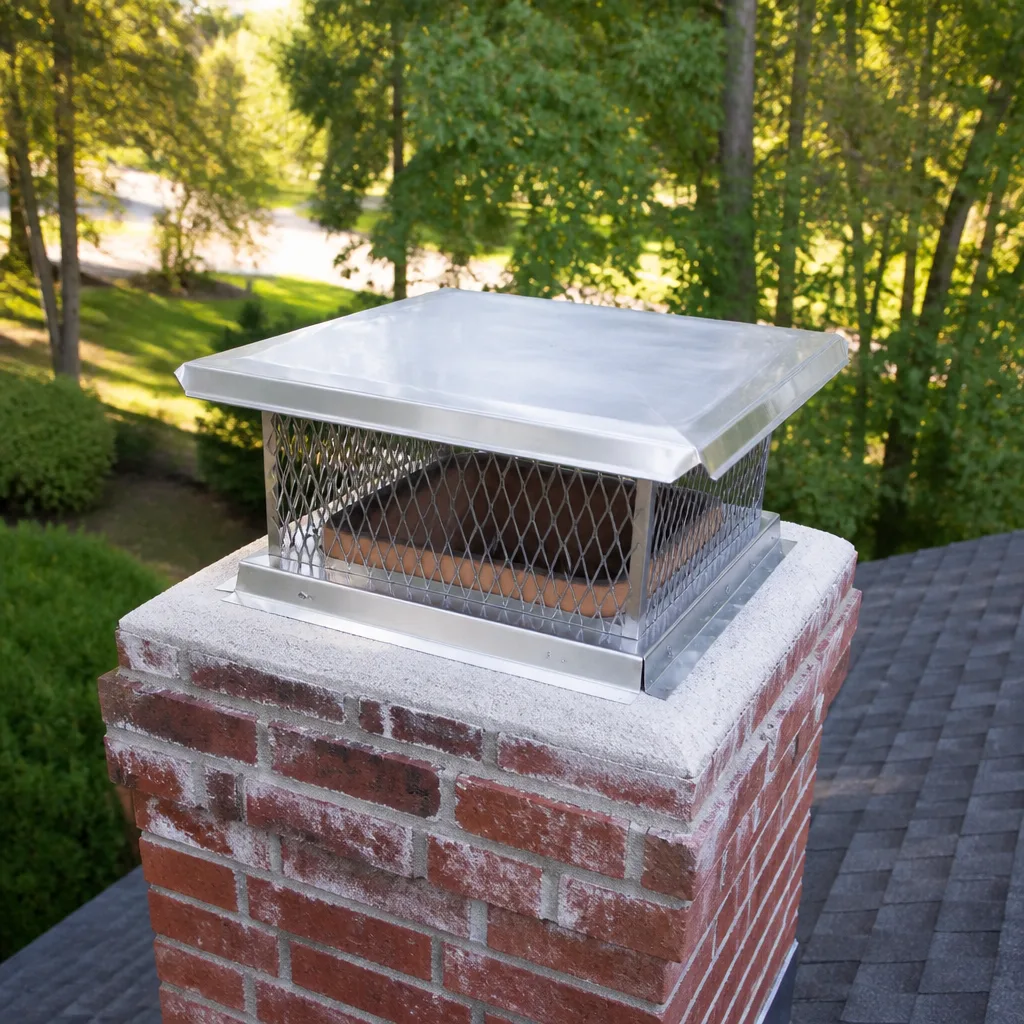
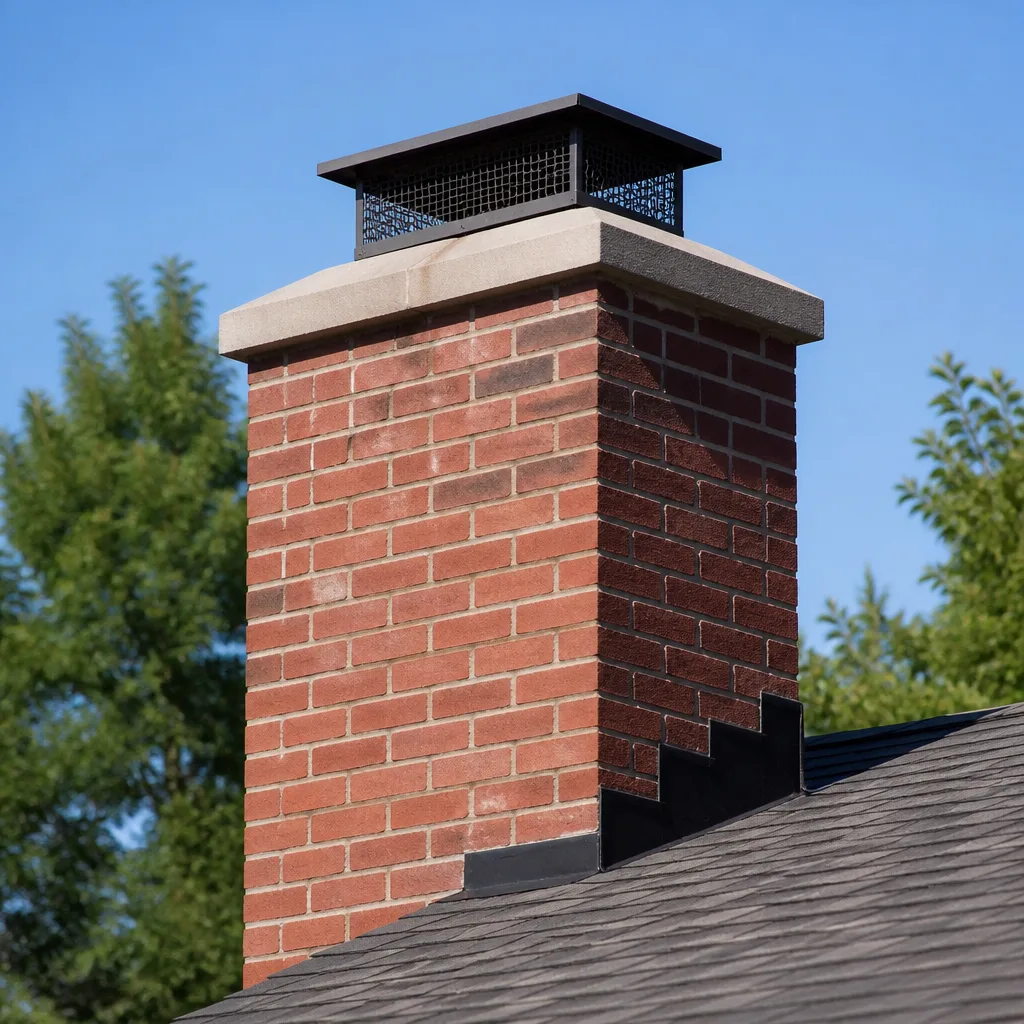
Ember-rated spark arrestor mesh has openings no larger than 3/4 inch. That’s the national standard for wildfire-prone areas. The mesh should sit snug against the cap frame with no gaps, no rust-through spots, and no sections that have pulled away. If you can see light through obvious holes from the ground with a pair of binoculars, the mesh is compromised. A decorative cap with wide slotted openings, no mesh at all, or mesh that looks like chicken wire is not doing the job.
The difference matters because a spark arrestor does two things. It keeps embers out, and it keeps sparks from your own fire in. During high-wind days, burning embers from your own fireplace can get pulled up the flue and onto your roof or your neighbor’s dry brush. In Lake View Terrace, where homes sit close to the hillsides, that’s a risk everyone shares.
The materials also matter. We stock and work with caps and arrestors from Olympia Chimney and Gelco, because those are built for the kind of sustained heat and wind abuse this valley dishes out. A thin sheet-metal cap from a big-box store will warp within a couple of seasons. You want stainless steel or heavy-gauge copper, properly sized to your flue tile or liner, with mesh that’s welded or mechanically fastened, not glued.
If you don’t know what you’re looking at from the ground, that’s normal. Most homeowners in Lake View Terrace can’t safely get on a roof to inspect a cap, and we don’t recommend you try. A chimney sweep can take photos from the roof during a routine visit and show you exactly what shape your cap is in. Knowing that one fact, whether your mesh is 3/4 inch and intact, is the single most useful emergency preparedness check any fireplace owner can make.
What to Do If You Suspect an Active Chimney Fire
A chimney fire sounds like a freight train in your flue. Homeowners who have been through one describe it as a deep roar, sometimes with a crackling or popping sound, and in severe cases, visible flames shooting from the chimney top. If you hear that sound, you don’t have time to browse your phone. These are the steps, in order:
- Close the damper. This cuts the fire’s oxygen supply. Do not throw water into the firebox. The thermal shock can crack your firebrick and turn a contained fire into a structural problem.
- Close the fireplace doors or glass if you have them. Anything that reduces airflow helps.
- Check the exterior of the chimney from outside. If you see flames from the top, call 911 immediately. This is a structure fire, not a maintenance problem.
- Evacuate everyone from the home. Do not stay inside to watch the chimney. Creosote fires can spread into the attic through cracked flue tiles faster than most people expect.
- Call 911 before you call anyone else. Even if the fire seems to die down, the heat may have compromised the flue liner or spread into framing. Firefighters will check with thermal imaging.
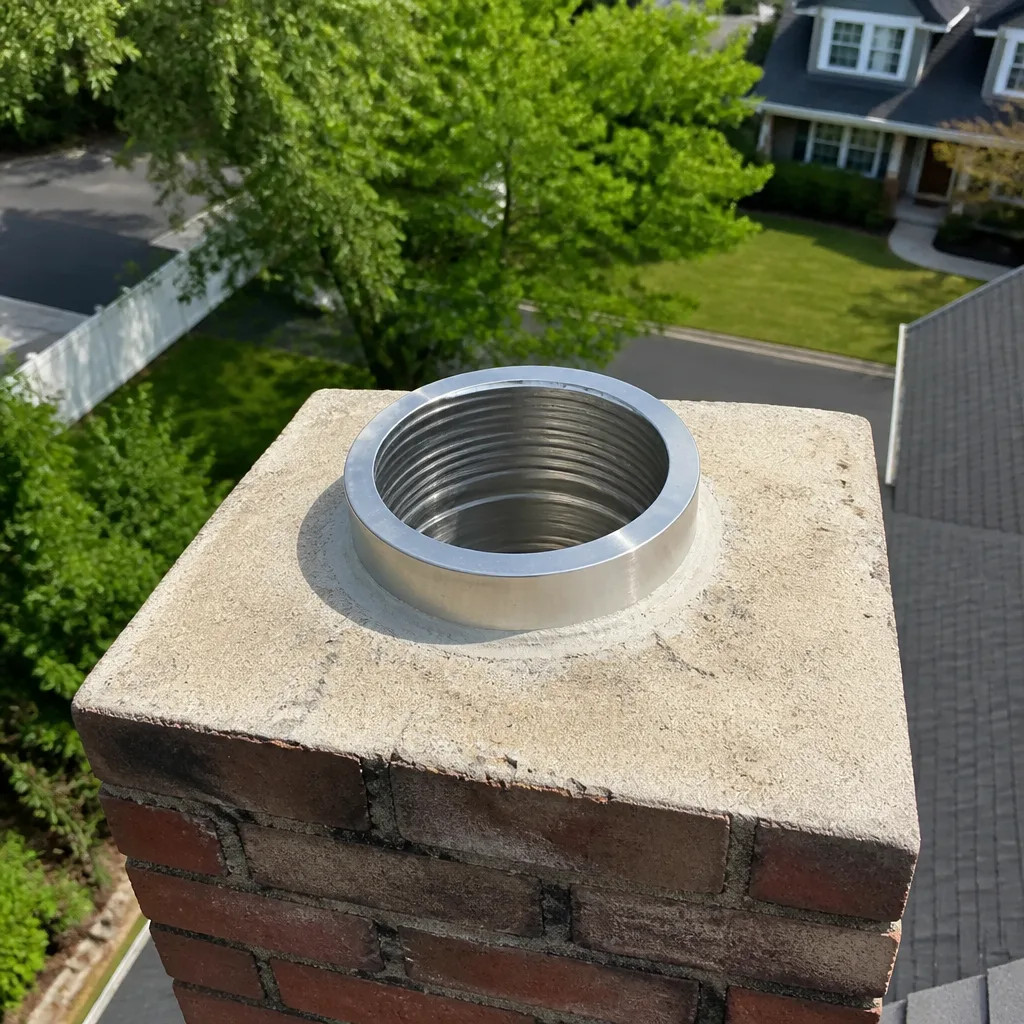
After the fire department clears the scene, do not use the fireplace again until a professional has inspected the entire system. A chimney fire can warp a stainless liner, crack clay flue tiles, and melt the mortar joints. What looks fine from the firebox can be a hidden void into your walls. That’s one reason we carry DuraFlex liner systems: when the liner is damaged, the right fix is often a full reline, not a patch job that leaves the original failure in place.
Pre-Evacuation Chimney Protocol During Wildfire Alerts
When a wildfire is burning within a few miles of Lake View Terrace and the winds are moving in your direction, you should have a ten-minute chimney routine ready. This is not about cleaning the chimney. It’s about reducing the odds that your chimney becomes an ember entry point while you’re gone.
- Close the damper completely. An open damper creates a direct pathway from the chimney top into your living room. Embers that enter the flue can drop straight onto your hearth.
- Close the glass doors or fireplace doors. If you have them, shut them. If you have a wood stove, close the air intake and the door tightly.
- Do a ground-level visual check of the cap. If your cap is missing or visibly damaged, note that for your evacuation checklist. A missing cap during a wind-driven fire event is a serious exposure.
- Remove anything combustible from the hearth. Firewood, newspaper, kindling, decorative branches. If an ember finds its way in, don’t give it a pile of fuel to land on.
- Close the flue damper if you have a top-sealing damper. Some homes have a cap-mounted damper that seals at the top. If that’s your setup, closing it is the single best thing you can do.
We’ve seen homes in the valley survive wildfire events with minimal damage because the owners understood their venting. The full system matters, not just the visible parts. A fireplace is a hole in your roof with a metal tube running through the attic. Everything about that assembly is a potential ember path. Lake View Terrace sits in a high-severity wildfire zone, and emergency planners consistently name ember entry as the leading cause of home ignition during wildland-urban interface fires. Your chimney is not a minor detail in that equation.
Post-Earthquake Chimney Assessment: What to Check From the Ground
Lake View Terrace sits close enough to the San Fernando and Sierra Madre fault zones that every homeowner should know what a damaged chimney looks like. After a significant quake, masonry chimneys often crack at the roofline or above, and those cracks can mean broken flue tiles inside. You don’t need to climb anything to do a useful first check.
From the ground, look for:
- Visible cracks in the visible chimney structure. Horizontal or stair-step cracks are more concerning than hairline vertical cracks, but any new crack is worth documenting.
- Fresh debris at the base of the chimney or on the roof. Chunks of brick, mortar, or flue tile that weren’t there before.
- Tilt or separation from the house. If the chimney looks like it’s leaning or pulling away from the wall, that’s a structural emergency. Stay out of the rooms directly below the chimney.
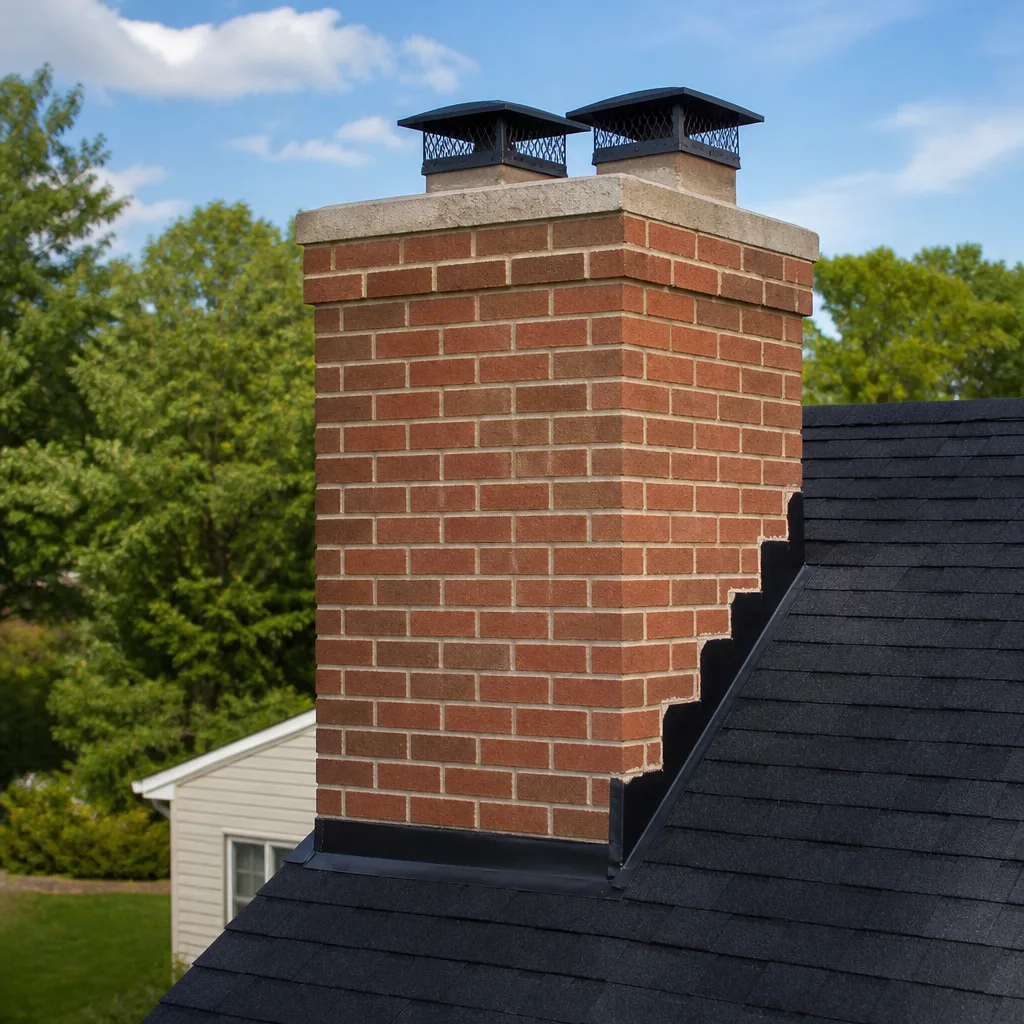
- Gaps around the flashing where the chimney meets the roof. New daylight, pulled-away metal, or obvious shifting.
- Inspection records. Every time a chimney sweep looks at your system, get it in writing. What was found, what was cleaned, and any recommendations. A simple invoice can be the difference between a covered claim and a denial.
- Liner certification or installation paperwork. If you’ve had a stainless liner installed, keep the manufacturer’s documentation and the installer’s invoice. Insurance companies want to know the liner was rated for the appliance.
- Repair photos. Before and after pictures of any repair work, especially around the firebox, flue, or cap. Your phone has a camera. Use it.
- Sweep service dates. The National Fire Protection Association standard is at least once a year, and many insurance policies now write that expectation into their wording. A chimney swept every October is a chimney your insurer treats differently than one swept never.
- Negative pressure from wind across the cap can pull smoke back into the house. If your chimney was barely drafting before, a 40 mph gust will make it obvious.
- Loose caps rattle, bend, and sometimes tear off entirely. A storm-flying cap is a projectile and a hole in your system.
- Wind flexes tall, unreinforced masonry chimneys. Over years, this contributes to cracks, loose mortar, and the kind of structural weakening that earthquakes finish off.
- Embers from any nearby fire, even a brush fire a mile away, travel farther and stay hotter in the wind. A cap that worked during calm weather is not necessarily a cap that works during a Santa Ana event.
- Assuming a decorative cap is a protective cap. If the mesh is wide or missing, the cap is a placeholder, not a safety device. This is the most common misconception we see in Lake View Terrace homes.
- Cleaning the fireplace with water during an active chimney fire. The thermal shock can crack the firebox masonry and make a contained situation much worse. Close the damper and call 911.
- Skipping the post-fire inspection after a chimney fire. Even a small flue fire can damage the liner in ways you cannot see from the living room. Using the fireplace after that is gambling.
- Waiting until fire season to check the cap. By the time a wildfire is visible on the news, every chimney company is booked solid. The time to verify your ember protection is now, not during an evacuation warning.
- Assuming the chimney is fine because the fireplace hasn’t been used much. Rodents, birds, and spiders love a quiet chimney. So does creosote buildup, which happens whenever a fire smolders, even a small one.
- Neglecting the exterior after an earthquake because nothing fell down. Hairline cracks in the flue are not visible from the ground, and a cracked flue is a direct carbon monoxide pathway into the house.
- Keeping no paperwork and no photos. Without documentation, your insurance claim after a chimney-related fire becomes a long fight you may lose. Take photos, save receipts, keep a simple record.
If you see any of these, do not start a fire. The risk after an earthquake is that damaged flue tiles or a shifted liner can vent combustion gases into the wall cavities or the attic. Carbon monoxide is odorless, and the first sign of a problem can be a CO alarm going off in the middle of the night. No fire is worth that risk. Call a professional to do a full interior and exterior inspection before you use the fireplace again.
We recommend that every Lake View Terrace home with a fireplace have a working CO detector on every floor, and ideally one in the room with the fireplace. That’s not a chimney-specific product, but it’s the last line of defense when a flue fails. The chimneys that kill people are almost never the ones that look scary. They’re the ones that were quietly damaged and then ignored.
Emergency Documentation for Insurance Claims
Insurance companies process chimney-related claims the same way they process every other claim: they look for evidence of maintenance. If your chimney has never been swept and the liner has never been inspected, your adjuster will probably call the damage neglect. That’s not a pleasant conversation to have after a house fire.
The documentation you want in a folder, physical or digital:
The pattern here is simple: documentation is cheap, and the lack of it is expensive. We can’t overstate how often a homeowner in Lake View Terrace tells us after the fact that they wish they’d saved the paperwork. You don’t need a filing cabinet. You need a folder in your email or a notes app with dates and photos. Ten minutes a year does it.
Our Shield Chimney Cleaning team provides written inspection notes after every visit, and we’re glad to help homeowners put together the specific records their insurance carrier wants to see. If you’ve never had a documented inspection, start now. The best day to create a paper trail is today.
The High-Wind Season No One Prepares For
Lake View Terrace gets the Santa Anas. The winds come down the passes in the fall and early spring, and they don’t care whether your chimney has been swept. What they do care about, in the sense that wind affects every chimney, is your cap’s fit, your damper’s seal, and the structural integrity of the flue.
Here’s what high winds actually do to a chimney system:
One specific thing to check before a forecasted wind event: make sure your chimney cap is actually attached. We have seen caps on Lake View Terrace homes sitting loose for years, held in place by nothing more than hope and a couple of rusted screws. If your cap is loose, tie-down or replacement is a fast fix, and it’s far cheaper than the roof repair a flying cap can cause.
The same wind discussion applies to your dryer vent. A damaged or disconnected dryer vent cleaning run is a fire risk on its own, but during high winds, a missing exterior vent cover becomes another entry point for dust, debris, and wind-driven embers. We treat the dryer vent, chimney, and fireplace as one connected system because in a wind event, they all breathe together.
Common Mistakes to Avoid
When to Call a Professional
Some chimney issues are DIY-able. Replacing a fireplace grate, cleaning out the firebox, checking the damper from inside the house. Those are fine. But any time you’re dealing with the flue interior, the cap, the liner, or structural masonry, the risk calculation changes. Falls from roofs are the leading cause of homeowner injury around chimneys, and working on a flue without proper equipment often turns a $300 sweep into a $3,000 repair.
Call a professional if you see visible cracks near the roofline, if your cap is missing or the mesh is compromised, if you’ve had a chimney fire, if you smell smoke when there’s no fire, or if an earthquake has shifted anything in your chimney system. Any of those is a reason to stop using the fireplace until it’s been checked. Shield Chimney Cleaning offers free estimates in Lake View Terrace – call (833) 593-4561 to get on the schedule. We answer 24/7. Fast dispatch from 7am to 7pm, Sunday through Friday.
See the difference
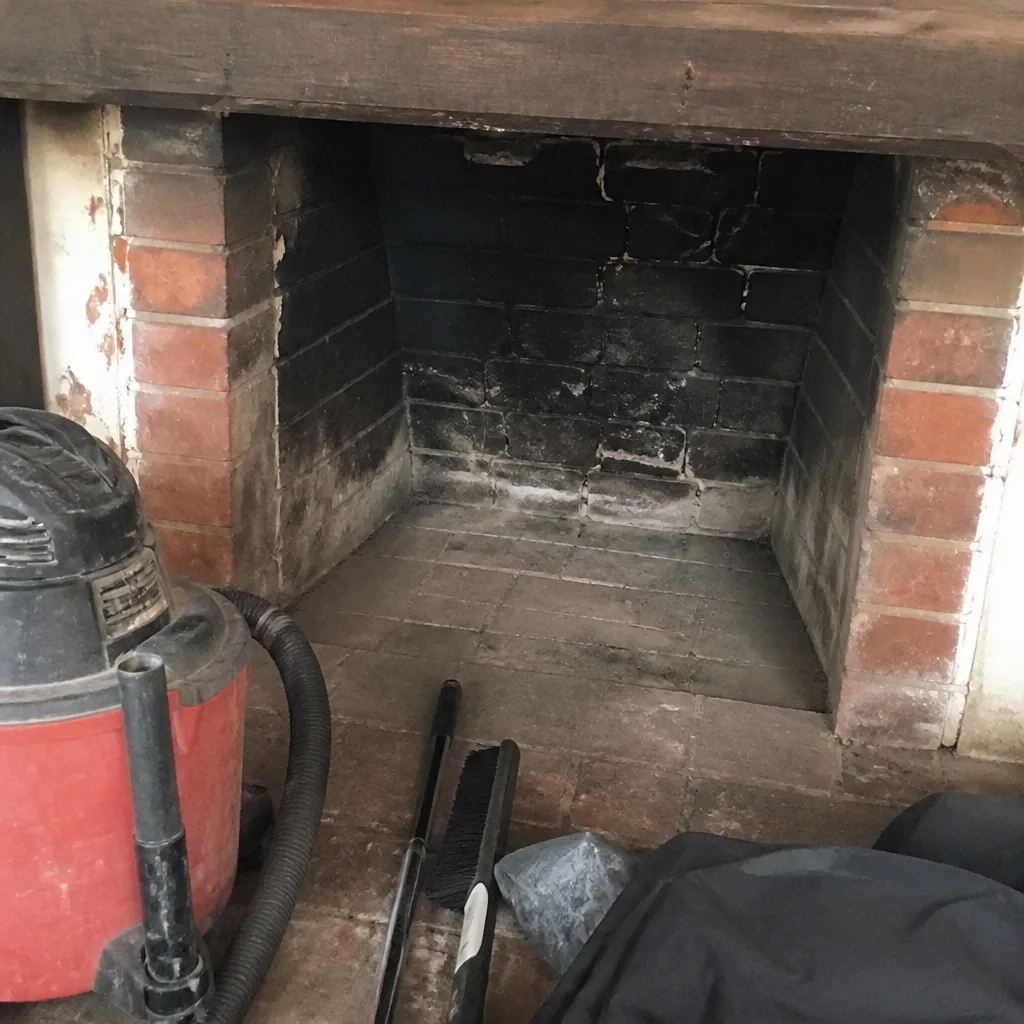 Before
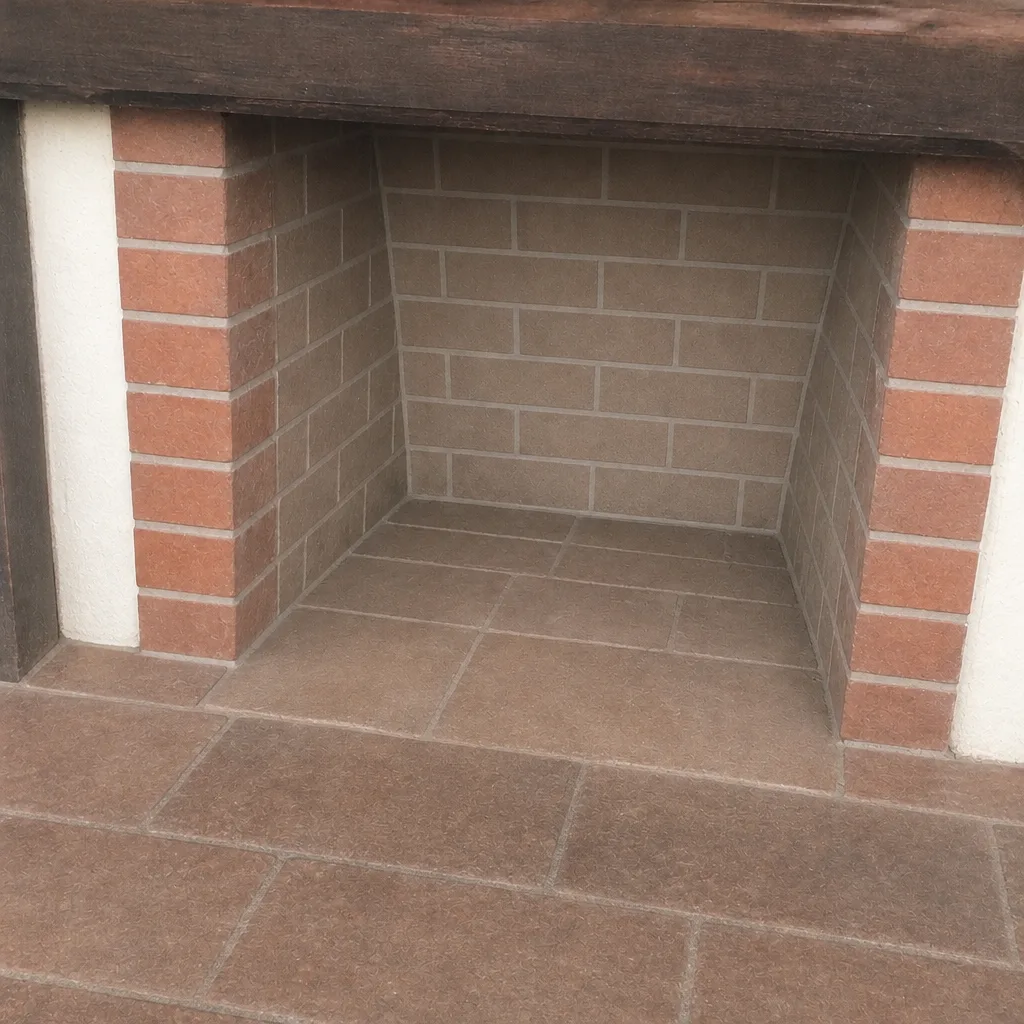 After
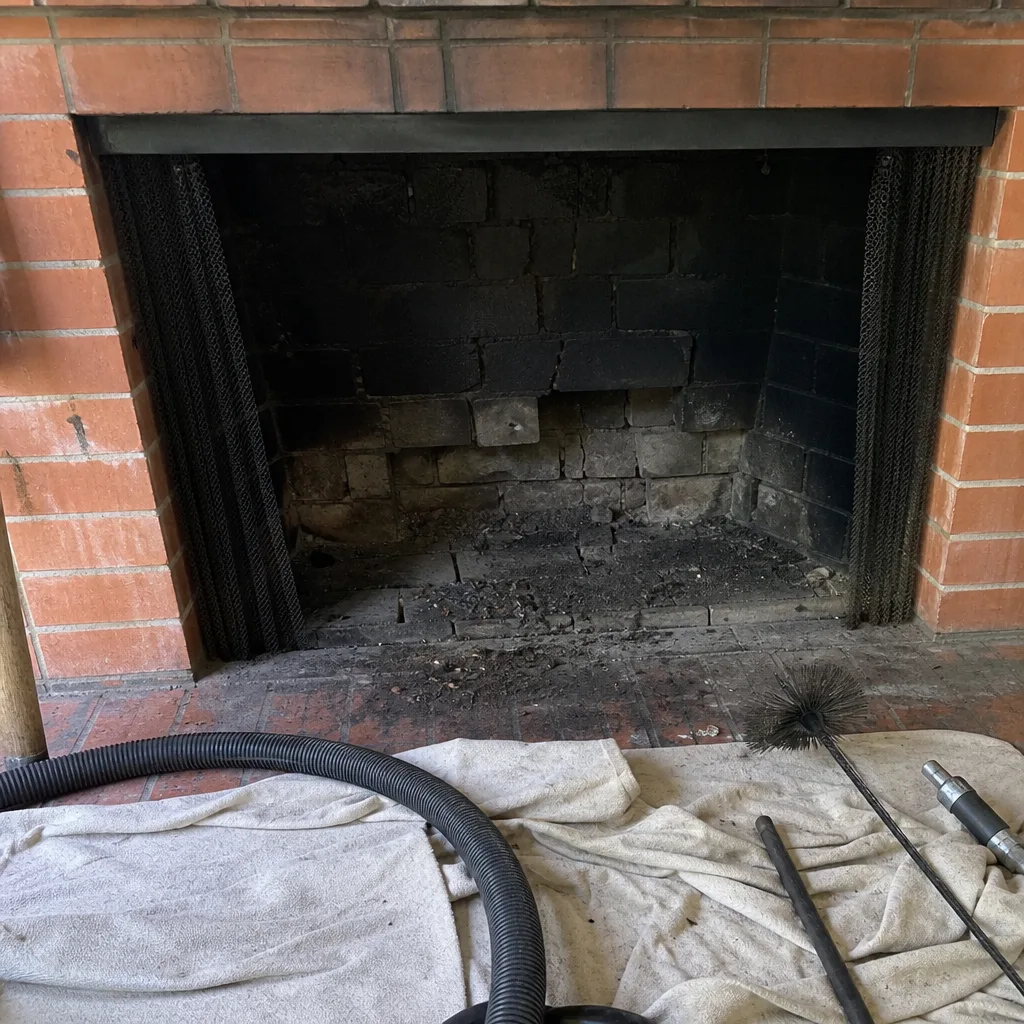 Before
 After
 Before
 After
Frequently Asked Questions
At least once a year, before your heaviest burning season. Homes that burn unseasoned wood or use the fireplace daily through the winter may need a second sweep mid-season. The National Fire Protection Association standard is annual, and most insurance policies now mirror that language.
A standard chimney sweep typically falls between $180 and $300 in the Lake View Terrace area, depending on the condition of the flue, the height of the roof, and whether any repairs are needed. The written estimate is the final word. Call (833) 593-4561 for a free estimate on your system.
Creosote accumulates inside the flue, and creosote burns. A flue with heavy creosote buildup is the direct cause of most chimney fires. Even if a fire doesn’t happen, that buildup restricts draft, which means smoke and carbon monoxide backdraft into the house. Skipping a sweep is not a maintenance lapse; it’s a safety decision you’re making by default.
You can check it from the ground with binoculars. Look for mesh that’s intact, a cap that sits squarely on the flue, and no obvious rust-through or missing sections. But most caps can’t be properly assessed from the ground, and climbing a roof to check is not a safe DIY task. We recommend a professional roof-level inspection at least once a year.
Yes. The damage that matters most after an earthquake is often inside the flue, where cracked tiles or a shifted liner can create a carbon monoxide path into the home. A visual check from the ground catches obvious problems, but a camera inspection is the only way to see the flue interior. This is standard practice in a seismically active area like Lake View Terrace.
A cap keeps rain and animals out. A spark arrestor is the mesh component that blocks embers from entering or escaping. Many caps are sold with arrestor mesh, but not all mesh is ember-rated. For wildfire protection in Lake View Terrace, you want mesh with openings no larger than 3/4 inch, made of stainless steel or heavy-gauge metal. Decorative caps without proper mesh provide rain protection only.
The Bottom Line
Chimney emergency preparedness for Lake View Terrace homeowners comes down to a few specific, actionable things. Verify that your cap has ember-rated mesh and is properly secured. Know the two-minute drill for an active chimney fire: close the damper, call 911, evacuate. Build a pre-evacuation routine for wildfire alerts that includes closing the damper and clearing the hearth. Do a ground-level visual check after any earthquake, and treat any crack or shift as a reason to stop burning until you’ve had a professional look. Keep your inspection records somewhere you can find them, because that paperwork is what insurance companies actually read. Your chimney works harder than you think, and in this part of the valley, the emergencies it protects against are not rare. They’re seasonal. Call (833) 593-4561. We answer 24/7. Fast dispatch from 7am to 7pm, Sunday through Friday.
Written by the team at Shield Chimney Cleaning, serving Lake View Terrace since 2013.