
Last updated November 5, 2026
 Sweep & inspection
 Caps & crowns
 Flue relining
 Masonry repair
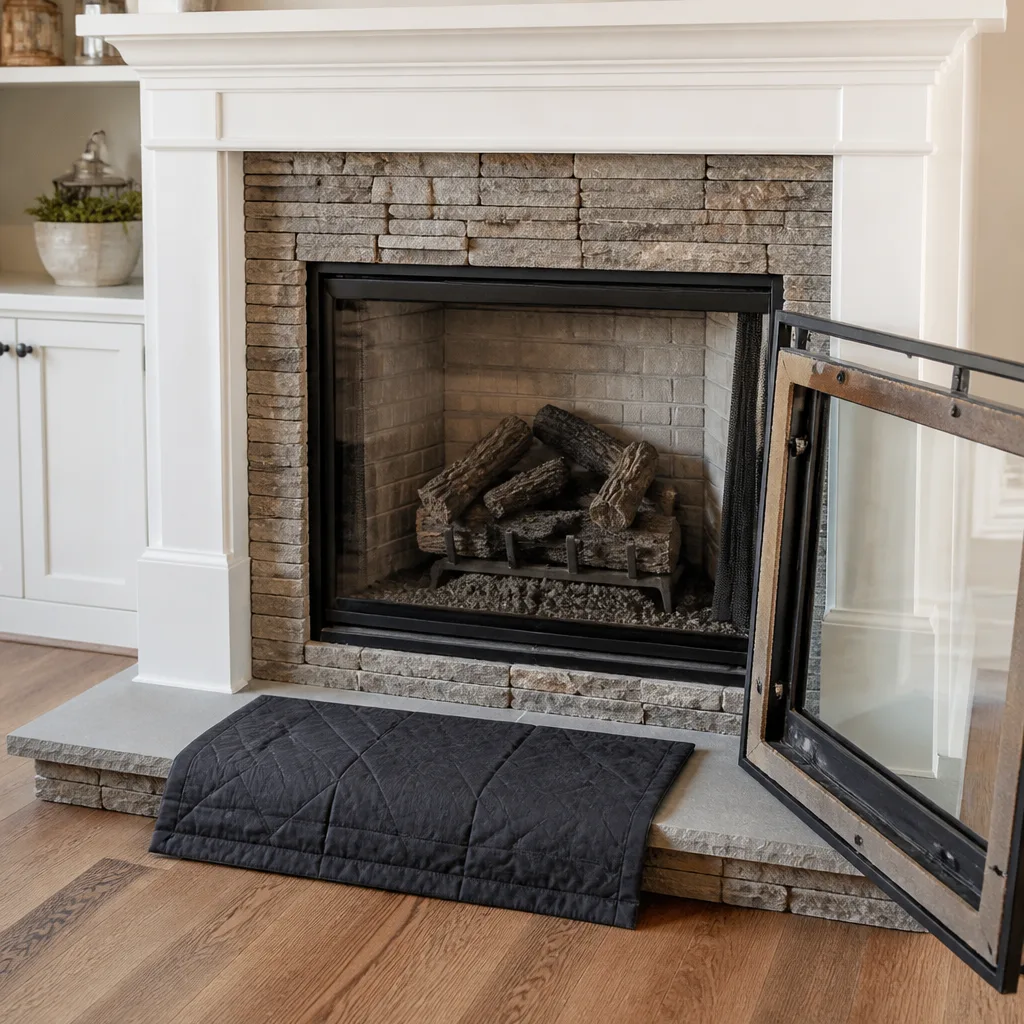 Gas fireplace service
Level 1 sweep and inspection to the NFPA 211 annual standard - flue, crown, cap, and flashing checked and photographed
Chimney sweep logs do not sweep chimneys. They loosen some creosote - which then falls where a brush and vacuum still have to collect it.
Chimney Cleaning Warning Signs: A Lake View Terrace Homeowner’s Reference Guide
Most people assume a chimney problem announces itself with drama: smoke pouring into the living room, a chimney fire, or a visible collapse. In reality, the earliest warning signs are quiet and easy to dismiss. A faint campfire smell in July. A white chalky stain spreading across the brick. A fireplace that takes thirty seconds to draw instead of ten. Homeowners in Lake View Terrace write these off as quirks of an older home, but each one is diagnostic information. This guide explains what these signs actually mean, what causes them, and when they warrant action.
Quick Answer
The most common chimney warning signs in Lake View Terrace are persistent smoke odors inside the home, slow or delayed draft when lighting a fire, white efflorescence staining on exterior masonry, crumbling mortar joints, and visible creosote buildup inside the flue. Any one of these indicates the venting system is not working correctly and should be inspected by a qualified chimney technician before the next burning season.
Styles & brands we work with
- Sweep & inspection
- Caps & crowns
- Flue relining
- Masonry repair
- Gas fireplace service
Table of Contents
- Smoke Odors: First Fire vs. Persistent Smell
- White Staining on Exterior Masonry
- Reading Smoke Behavior Inside the Firebox
- What to Look for From the Roofline
- Warning Signs for Gas Inserts and Prefab Units
- Creosote: What You See and What You Don’t
- Structural Warning Signs You Can Spot Yourself
- When to Call a Professional
Smoke Odors: First Fire vs. Persistent Smell
The distinction between a normal seasonal smell and a genuine warning sign comes down to timing and conditions. The first fire of the season often produces a brief smoky smell as dust and light residue burn off. That resolves within an hour or two and doesn’t return. A persistent campfire smell on windy days, during weather changes, or in summer when the fireplace hasn’t been used in months is different. That’s a pressure-driven backdraft, and it tells you something specific about your flue’s draft dynamics.
In Lake View Terrace, where homes sit in a valley and experience the diurnal wind patterns common to the San Fernando Valley, backdrafting happens more often than homeowners realize. Warm air rises, but only when the flue is clear and the pressure differential allows it. When a chimney is partially obstructed by creosote or animal nesting, or when negative air pressure inside the house pulls air down the flue, smoke reverses direction. You smell it because combustion gases are entering the living space instead of exiting through the cap.
What we look for during a chimney sweep is the condition of the flue interior. Even a quarter-inch of creosote can disrupt draft dynamics. Moisture intrusion from a damaged cap or crown can create odor issues that get worse in humid conditions, not better. If you can smell your fireplace when it’s cold, the system is talking to you. The question is what it’s saying.
White Staining on Exterior Masonry
White chalky staining on your chimney’s exterior brick, called efflorescence, is one of the most frequently dismissed warning signs in Lake View Terrace. Homeowners tell us they thought it was just cosmetic, like hard water spots on a shower door. Structurally, it’s evidence of water moving through the masonry. Efflorescence occurs when water enters the brick, dissolves natural salts within it, and carries those salts to the surface as the water evaporates. The stain is the residue left behind.
The reason it matters is that the water that left that stain is still inside your chimney system. The stain isn’t the problem; it’s the symptom of ongoing moisture intrusion. In Lake View Terrace, where summer temperatures routinely exceed 100 degrees and winter brings intermittent rain, the expansion and contraction of moisture-laden masonry accelerates deterioration. Water that soaks into brick and then heats up expands. Over repeated cycles, this weakens mortar joints and can cause spalling, where the brick face pops off entirely.
Efflorescence around the roofline or upper third of the chimney usually points to a failed cap, a cracked crown, or deteriorated flashing. These are repairable with professional-grade materials like HeatShield resurfacing systems, which restore flue integrity rather than patching over damage. If you see white staining appearing or spreading, it’s worth getting an inspection before the water has another season to do its work.
Reading Smoke Behavior Inside the Firebox
How smoke behaves when you light a fire is one of the most reliable diagnostic tools a homeowner has, and it costs nothing to observe. Most people know that smoke should go up. Fewer know that how it goes up, and how quickly, tells you something useful. There are three distinct smoke behaviors that indicate three different underlying problems.
Delayed draw is what happens when you light your fire and smoke lingers in the firebox for 30 seconds or more before establishing an upward draft. In a properly functioning chimney, the draft should establish almost immediately. Delayed draw usually means the flue is partially obstructed, the chimney is too cold, or there’s a competing negative pressure source inside the house, like a running exhaust fan or a tightly sealed home pulling air down the flue.
Smoke rollout is more serious. This is when smoke exits the front of the fireplace instead of rising up the flue, even after the fire is established. Rollout indicates a significant obstruction or a structural problem with the flue itself. It can also happen when the damper isn’t fully open or when the firebox and flue size are mismatched. Smoke rollout is never normal, and it should stop you from using the fireplace until a technician has assessed it.
Backpuffing is the third pattern. This is when smoke periodically puffs into the room, usually in rhythm with wind gusts or mechanical system cycles. Backpuffing often indicates an oversized flue relative to the firebox, which prevents proper updraft velocity, or a venting competition issue where another appliance is drawing air from the same space. Here’s how to assess what you’re seeing:
- Open the damper fully and confirm it’s not stuck or partially closed.
- Light a small piece of newspaper and hold it near the damper opening. Watch which way the smoke moves.
- If smoke rises after a delay longer than 15 seconds, you have a draft establishment problem.
- If smoke pushes back into the room, stop using the fireplace and schedule an inspection.
- Note any exhaust fans, dryers, or furnaces running when the issue occurs. Venting competition is a common cause in tightly built homes.
In our experience serving Lake View Terrace, smoke behavior problems are among the most common reasons homeowners call us. What we appreciate is when a homeowner can describe exactly what they observed. It gives us a head start on the diagnosis.
What to Look for From the Roofline
You don’t need to climb onto your roof to spot most chimney problems, but you do need to look at the right things from the right angle. The most information-rich view is from the ground, looking up at the chimney against the sky. In Lake View Terrace, where many homes have pitched roofs and chimneys that rise several feet above the roof deck, the chimney cap and crown are visible from the front yard or driveway.
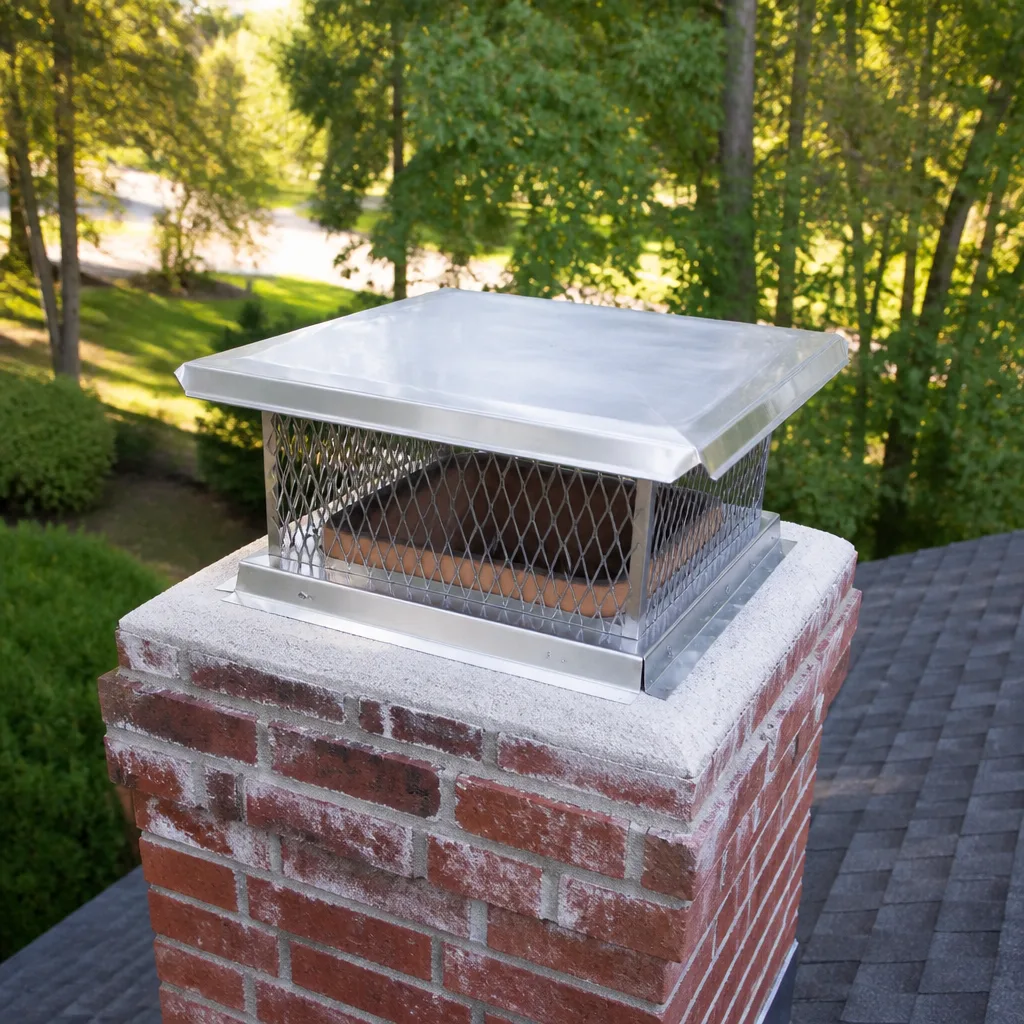
Start with the cap. A missing or damaged cap is the single most common entry point for water, birds, and debris. Without a cap, rain falls directly into the flue, where it mixes with creosote and accelerates corrosion. Birds and squirrels build nests that block the flue entirely. We recommend caps made by Famco or Copperfield, both of which are built from commercial-grade materials designed to withstand years of exposure. A cheap galvanized cap from a hardware store will rust through within a few seasons of San Fernando Valley sun and winter rain.
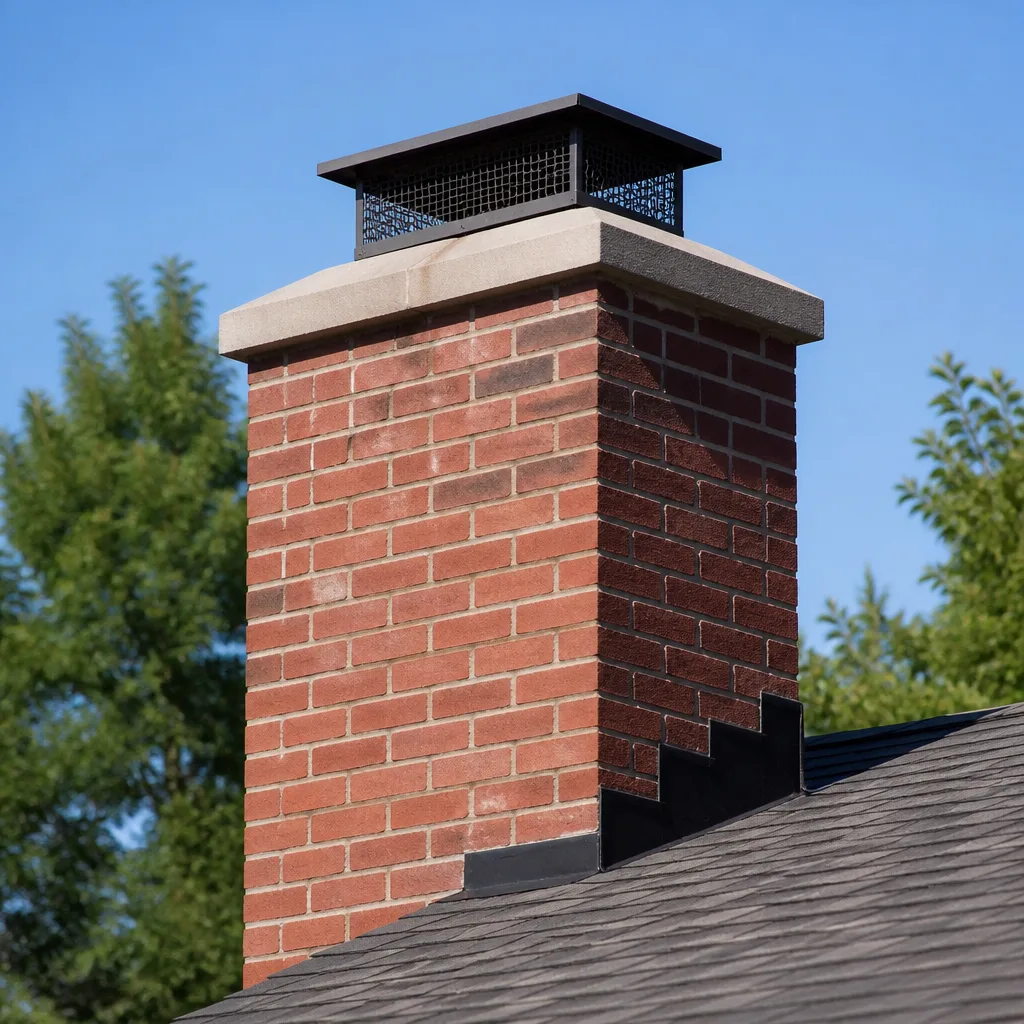
Next, look at the crown. This is the concrete or mortar slab that covers the top of the chimney structure. It should be solid, with no visible cracks. Hairline cracks in the crown let water into the masonry below. In a climate like Lake View Terrace’s, where intense heat is the dominant weather pattern, cracks expand quickly. What starts as a hairline split becomes a water channel within a year or two.
Also check the flashing, the metal strip where the chimney meets the roof. Deteriorated flashing is one of the most common sources of roof leaks around chimneys. If you see rust, lifted edges, or separation between flashing and masonry, water is getting in. These visual checks take a few minutes and tell you a lot about whether your chimney needs attention before it becomes an emergency.
Warning Signs for Gas Inserts and Prefab Units
Gas fireplace inserts and prefabricated units don’t produce creosote, but they have their own set of warning signs that many Lake View Terrace homeowners don’t know to look for. The assumption that gas means maintenance-free is one of the more expensive misconceptions we encounter. Gas appliances still vent combustion gases, and those gases still need a clear path to the outside.
For gas inserts, the primary warning sign is soot accumulation on the glass, logs, or surrounding interior surfaces. Gas burns cleanly when the air-to-fuel mixture is correct. When it’s not, often due to clogged burner ports, the flame produces soot. That soot can accumulate inside the venting system and reduce its efficiency. A second warning sign is unusual flame appearance. A healthy gas flame is blue at the base with some yellow at the tips. An all-yellow or orange flame on a natural gas appliance indicates incomplete combustion. That’s a venting or burner adjustment issue and should be checked.
For prefab units, the warning signs are mostly visual. Look for rust on the exterior or interior of the unit. Prefab chimneys are double-walled metal systems. Rust means moisture has entered, and moisture means the insulation layer between the pipe walls may be compromised. Look for staining on the ceiling or walls around the unit. This can indicate heat transfer through a failing pipe section. Finally, notice how long it takes the room to warm up. A prefab unit that used to heat the room quickly but now struggles is often suffering from restricted airflow through the venting system.
We service gas and prefab systems as part of our full-system approach. The Shield Chimney Cleaning philosophy is that every venting system in the house deserves the same level of attention, whether it burns wood or gas.
Creosote: What You See and What You Don’t
Creosote is the byproduct of incomplete wood combustion. It forms inside the flue as smoke cools on its way up, condensing into a tar-like substance that hardens over time. The part you can see, a black or brown shiny coating on the damper or visible flue surface, is the same material coating the entire interior of your chimney where you can’t see it. Creosote is the primary fuel for chimney fires.
There are three stages of creosote buildup, and they matter because they require different methods to remove:
- Stage one is a light dusting of soot that brushes away easily with standard sweeping tools.
- Stage two is a thicker, flakier deposit that resembles coffee grounds or dark cornflakes. It requires more aggressive mechanical cleaning.
- Stage three is a hardened, glazed layer that looks like black glass. This is the most dangerous stage, and it often requires chemical treatment or specialized tools to remove safely.
Homeowners can check for visible stage one or two creosote by opening the damper and looking up with a flashlight, or by running a finger along the damper. But the critical point is this: you can’t see most of it. The flue interior above the firebox, where most creosote accumulates, is out of sight. In Lake View Terrace, where homeowners burn both seasoned oak from local firewood suppliers and occasional soft woods, creosote accumulation varies widely depending on burn habits. The only way to know the condition of your entire flue is a proper inspection with the right equipment.
Structural Warning Signs You Can Spot Yourself
Structural issues in masonry chimneys develop slowly, which means there’s usually a window where an observant homeowner notices something before it becomes a safety hazard or an expensive reconstruction. The signs are visible if you know what you’re looking at.
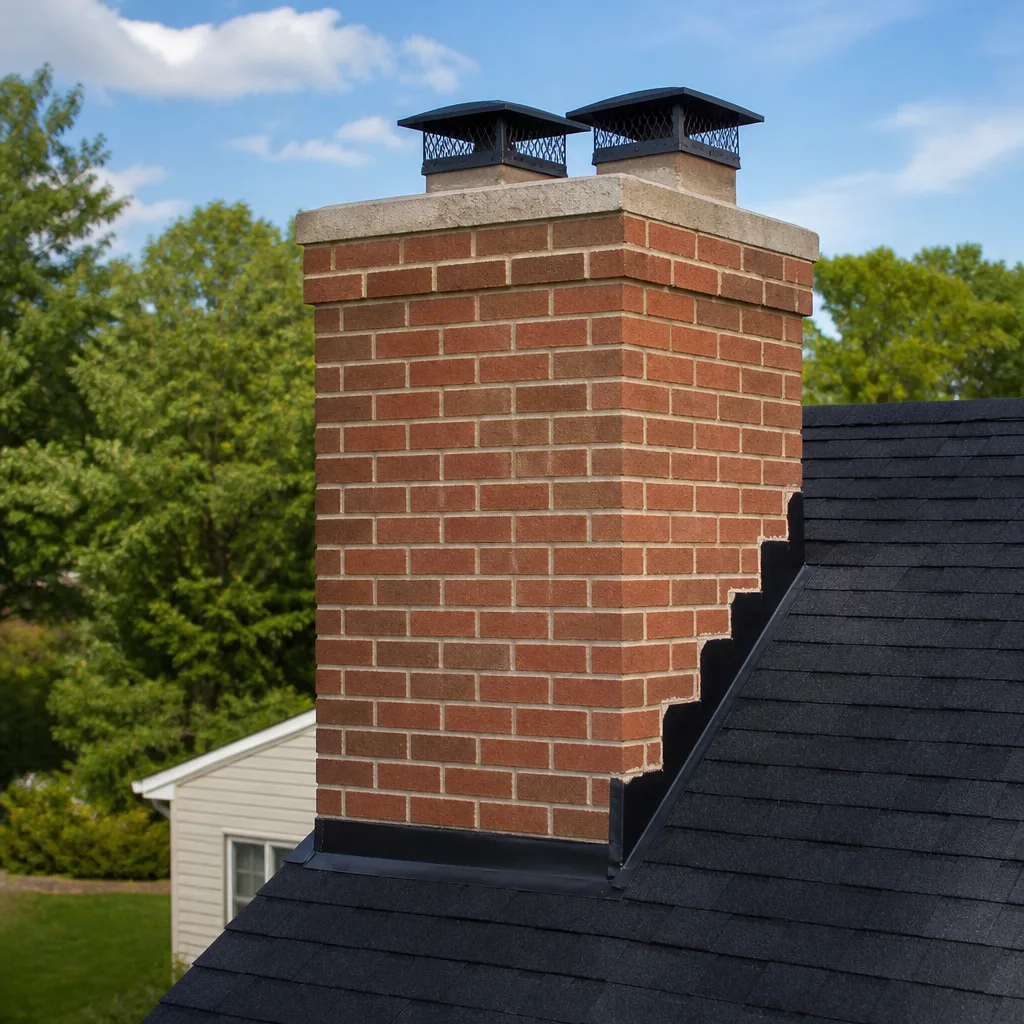
Deteriorating mortar joints are the most common early indicator. Run your eyes along the vertical and horizontal joints between bricks. If the mortar looks recessed, crumbly, or missing in places, the masonry is losing its structural bond. In Lake View Terrace’s hot, dry summers, mortar dries out and breaks down. These joints need repointing before water and movement cause larger problems.
Spalling brick is the next stage. This is when the brick face actually pops off, leaving a rough, jagged surface behind. Spalling means water has penetrated the brick, and the expansion pressure has caused the face to detach. Spalled brick can’t be repaired by patching. The affected bricks need replacement.
A leaning chimney is the most serious structural warning sign. Any visible lean, even a slight one, indicates a failing foundation or compromised masonry. This is not something to monitor. It’s something to address immediately.
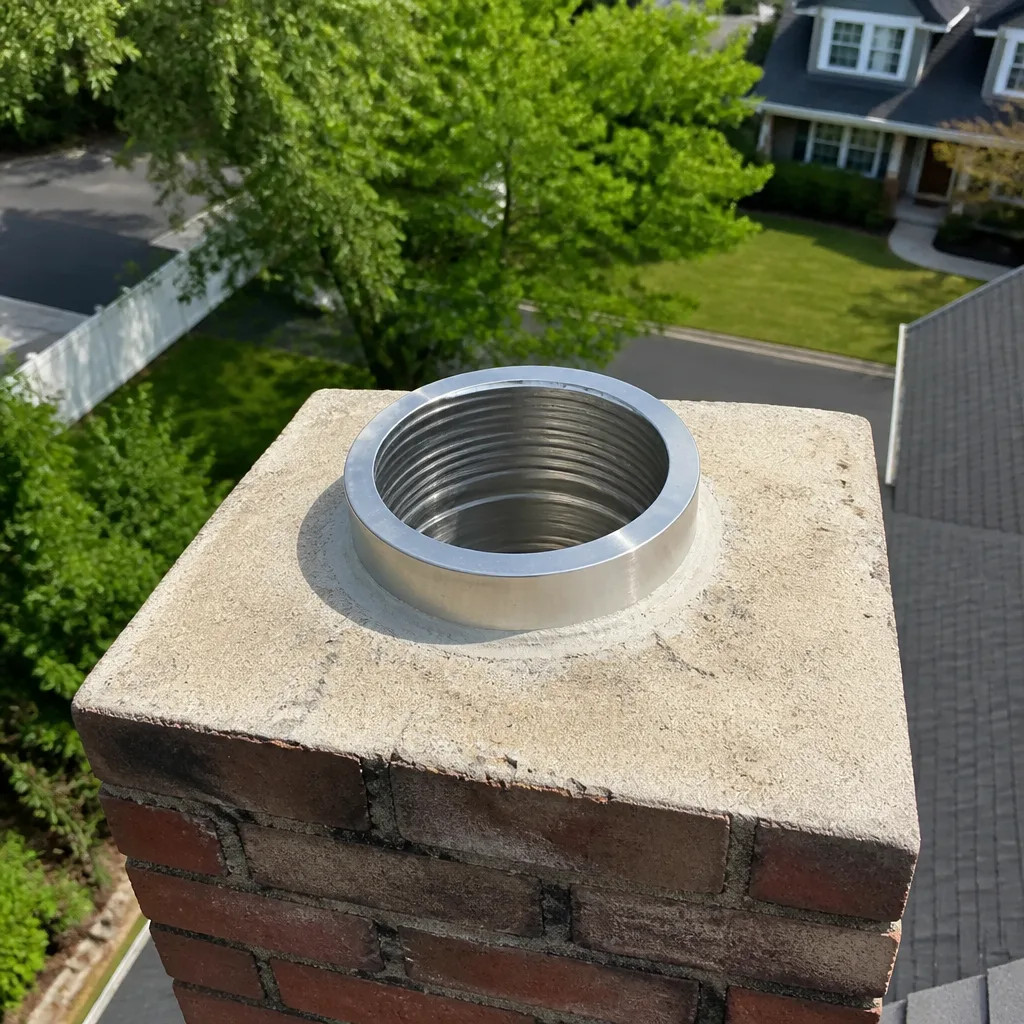
When we repair chimneys in Lake View Terrace, we use HeatShield resurfacing systems for flue restoration and DuraFlex lining systems when a full liner replacement is warranted. These are the materials the job requires, and they’re what allow us to stand behind the work. Your chimney works harder than you think, especially in this climate, and structural attention paid early prevents structural costs later.
Common Mistakes to Avoid
- Treating efflorescence as cosmetic and scrubbing it off without addressing the water source. The stain returns because the moisture is still there. Removing the stain without fixing the cause lets the underlying damage continue.
- Assuming a gas insert needs no maintenance. Gas units vent combustion gases and can develop soot, corrosion, and venting obstructions just like wood systems. Skipping inspection on a gas insert is a false economy.
- Using the fireplace to test for a chimney fire smell instead of calling for an inspection. If you smell smoke when the fireplace isn’t in use, the draft is reversed. Lighting a fire in that condition can fill the house with smoke.
- Ignoring slow draft as normal for an older home. Chimneys are engineered systems. A properly functioning flue draws the same in a 1960s ranch house as in new construction. Slow draw means something has changed.
- Waiting until fall to think about the chimney. By the time burning season arrives in Lake View Terrace, every chimney company is booked. Spring and summer are ideal for inspection and repair.
- Using hardware store caps and patch kits instead of professional-grade components. A cap from Famco or Copperfield costs more for a reason. It’s built to last in this climate, not to rust through in two seasons.
When to Call a Professional
You should call a chimney professional if you notice any of the warning signs covered in this guide: persistent smoke odors, visible efflorescence, smoke rollout or delayed draft, missing or damaged cap, cracked crown, spalling brick, or stage two or three creosote buildup. Also call if you’ve just moved into a home with an existing fireplace and have no record of when it was last inspected. A chimney in unknown condition should be treated as needing inspection before use. Shield Chimney Cleaning offers free estimates in Lake View Terrace. Call (833) 593-4561. We answer 24/7. Fast dispatch from 7am to 7pm, Sunday through Friday.
See the difference
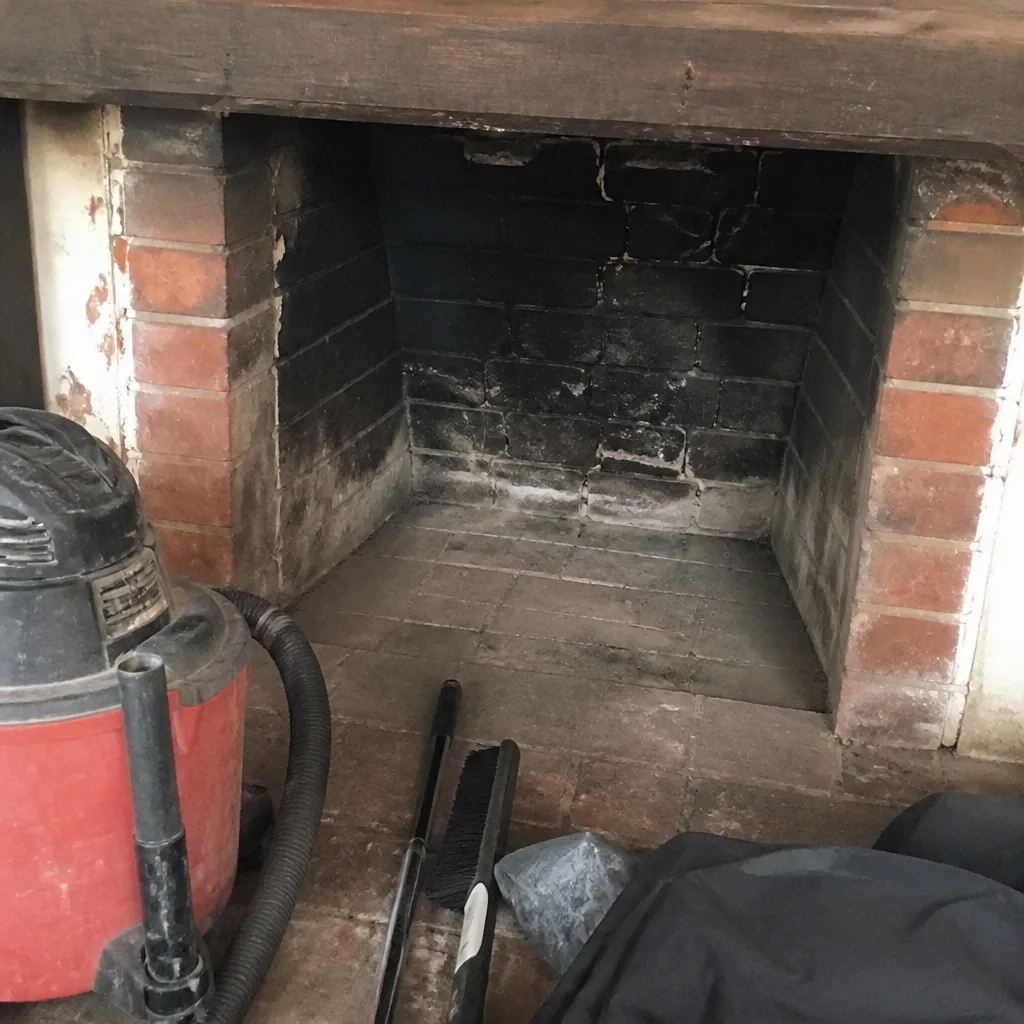 Before
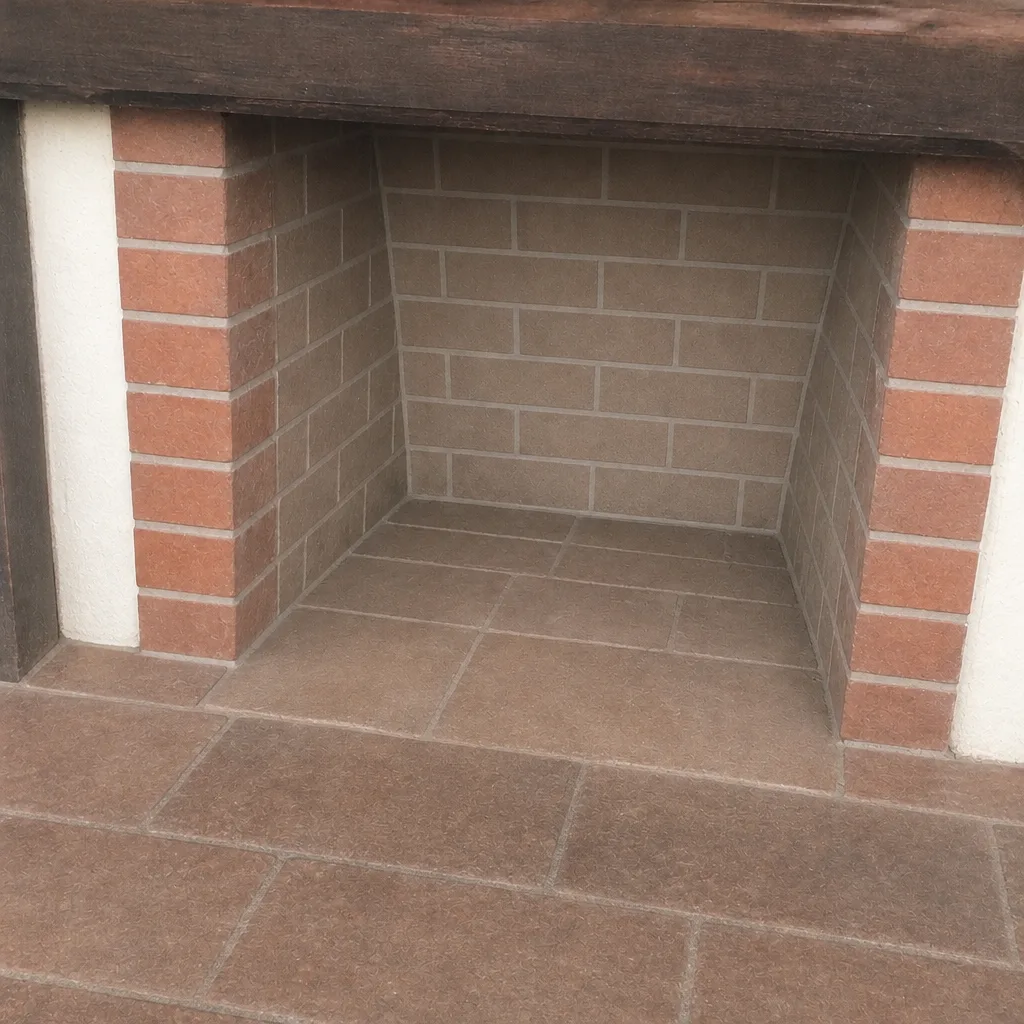 After
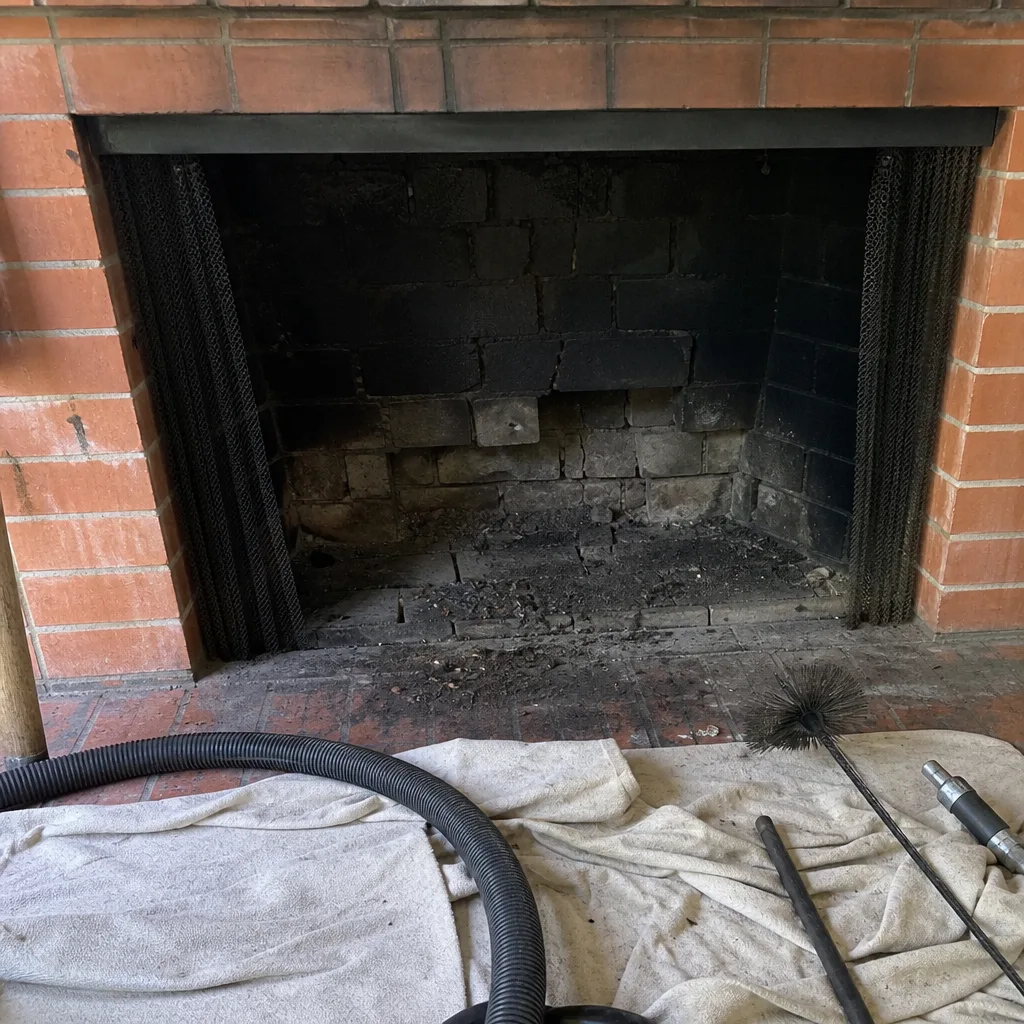 Before
 After
 Before
 After
Frequently Asked Questions
Your chimney needs cleaning if you see visible creosote buildup on the damper or flue walls, if you smell smoke when the fireplace isn’t in use, or if smoke is slow to draw upward when you light a fire. The National Fire Protection Association recommends inspection at least once a year. In Lake View Terrace, where many homes burn wood regularly through the cooler months, an annual sweep before burning season is the standard practice.
White staining, called efflorescence, means water is moving through your masonry and carrying dissolved salts to the surface. The stain itself is harmless, but it indicates ongoing moisture intrusion that will eventually cause mortar deterioration and brick damage if not addressed.
A summer smoke smell indicates a backdraft, where air is being pulled down the chimney and into your home instead of rising out. This happens when the flue is obstructed, when a damaged cap allows moisture to collect, or when pressure inside the house creates a negative draft. It’s a sign the venting system needs inspection.
We don’t recommend it. Chimney sweeping requires specialized brushes, rods, and safety equipment, and it puts you on a ladder or roof. More importantly, a professional sweep includes an inspection of the entire system, looking for damage that you can’t see from the firebox. The goal isn’t just removing soot; it’s confirming the chimney is safe to use.
For a wood-burning fireplace used regularly through the winter, once a year. If you burn soft woods or less-than-fully-seasoned wood, you may need it more often. Gas inserts need inspection annually too, though they don’t need sweeping as frequently. The sweep and the inspection happen together.
The cost of a chimney sweep in Lake View Terrace depends on the condition of the flue, the extent of creosote buildup, and whether any repairs are needed. Every job is priced by a written estimate specific to your chimney. Call (833) 593-4561 for a free estimate. We answer 24/7.
The Bottom Line
Chimney warning signs are specific, observable, and meaningful. The smell of smoke on a hot afternoon, a white stain spreading across brick, smoke that lingers before it rises, a cap that’s missing entirely. These aren’t quirks. They’re your chimney telling you what’s wrong. Lake View Terrace homeowners who learn to read these signs catch problems early, when they’re repairable, not after they’ve become structural failures or fire hazards. The full system matters, not just the visible parts. And a professional inspection is the only way to see the whole picture.
Contact Us
If you’ve noticed any of the warning signs in this guide, don’t wait until burning season to address them. Shield Chimney Cleaning offers free estimates for chimney sweeps, inspections, and repairs in Lake View Terrace. We’re stocked and trained on professional-grade materials including DuraFlex, HeatShield, Famco, and Copperfield, and we handle the full system: chimney sweep, chimney repair, and dryer vent cleaning. Call (833) 593-4561. We answer 24/7. Fast dispatch from 7am to 7pm, Sunday through Friday.
Written by the team at Shield Chimney Cleaning, serving Lake View Terrace since 2013.